

Geima Guesthouse
Eco-retreat in Tiwai rainforest, Sierra Leone


Nightlife on a walk through the forest
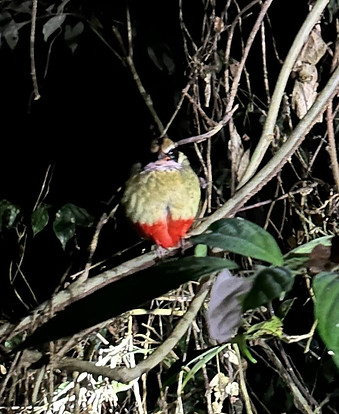

Wildlife that can be found at Tiwai
Tiwai Island Wildlife Sanctuary is one of the richest wildlife areas in West Africa and is especially famous for its rainforest species, primates and birdlife. Finding these elusive creatures takes time and patience, and the help of one of the island's guides.
Primates at Tiwai:
Tiwai is best known for having one of the highest concentrations of primates in the world, with eleven different species recorded on the island including:
-
Western chimpanzee
-
Diana monkey
-
Campbell’s mona monkey
-
Lesser spot-nosed monkey
-
Green monkey
-
Western red colobus
-
King colobus (western pied colobus)
-
Olive colobus
-
Sooty mangabey
-
Potto
Mammals and Other Animals
The island and surrounding rainforest are home to a range of rare mammals, including:
-
Pygmy hippopotamus
-
Duikers (small forest antelope)
-
Bongo antelope
-
Wild hogs
-
Pangolins
The pygmy hippopotamus is particularly important. Tiwai and the nearby Gola forests are considered one of the remaining strongholds for this elusive and endangered species.
Birds
Tiwai is regarded as one of the best birdwatching sites in Sierra Leone. More than 135 bird species have been recorded on the island itself, while the wider Gola-Tiwai forest system supports up to 448 species.
Notable birds include:
-
White-necked rockfowl
-
White-breasted guineafowl
-
Timneh parrot
-
Eight species of hornbill
-
Gola malimbe
The white-necked rockfowl is one of the rarest birds in Africa and is considered a flagship species for conservation in the region.
Reptiles, Fish and Insects
The island also supports:
-
around 425 reptile and amphibian species,
-
more than 500 freshwater fish species,
-
and hundreds of butterfly and dragonfly species.
Scientists are particularly interested in the freshwater fish populations because several species are unique to the Upper Guinean forest river systems.
Plants and Rainforest
Tiwai’s rainforest contains thousands of plant species, including rare orchids and giant tropical trees. The island is one of the last relatively intact examples of the ancient Upper Guinean rainforest ecosystem that once covered large areas of West Africa.